

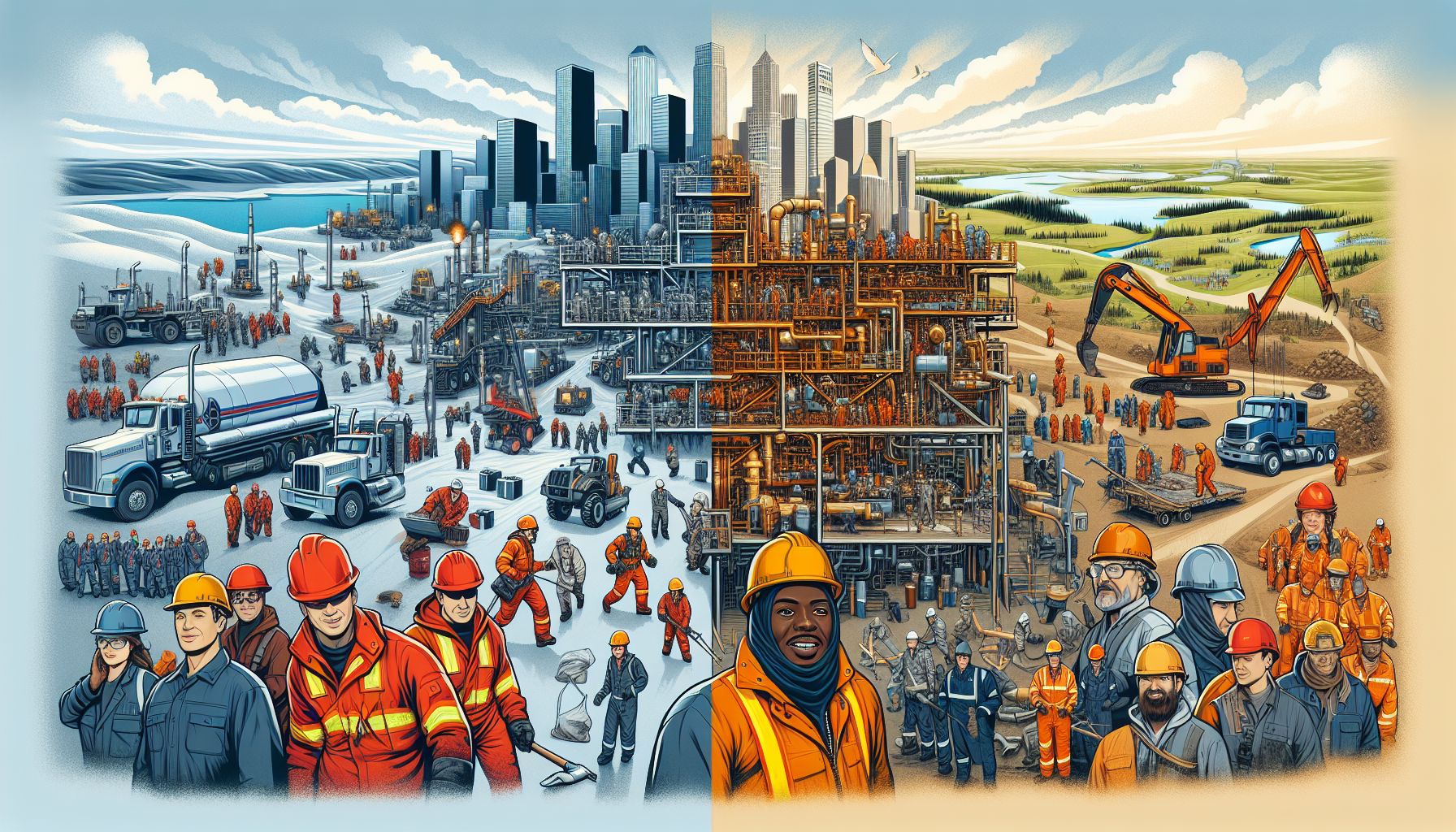
Canada’s oil and gas industry is an intricate amalgamation of relentless dedication, daunting challenges, and untapped opportunities. The vast and diverse landscapes of this great nation hold immense potential for exploration and extraction of natural resources. However, this crucial sector faces a myriad of obstacles that require innovative solutions and a sustainable approach to ensure its long-term viability.
A Brief Overview of Canada’s Oil and Gas Industry
Ranked as the fourth-largest producer of oil and gas globally, Canada possesses enviable natural resources and extensive reserves. This industry serves as a cornerstone of the nation’s economy, contributing significantly to its GDP and job creation. The regions of Alberta, British Columbia, and Saskatchewan boast abundant oil and gas reserves, making them hotspots for exploration and production activities.
The Impregnable Resilience of the Industry
Over the years, Canada’s oil and gas industry has demonstrated remarkable resilience, weathering both economic downturns and ecological challenges. The sector has proven its ability to adapt and evolve, ensuring stability in an ever-changing market. Advances in technology and operational efficiency have played a pivotal role in enhancing its resilience. Extraction techniques, such as hydraulic fracturing and steam-assisted gravity drainage, have revolutionized the industry, enabling access to previously inaccessible reserves.
Challenges Standing in the Way
No industry is without its share of challenges, and the oil and gas sector in Canada is no exception. One of the most notable hurdles is the transportation of resources. The lack of adequate pipeline infrastructure restricts the efficient transportation of oil and gas from production sites to refineries and export facilities. Consequently, Canada has had to rely on less efficient methods, such as rail transportation, contributing to increased costs and potential environmental risks.
Another significant challenge is the environmental impact. The extraction and processing of oil and gas undoubtedly have an ecological footprint. The industry’s carbon emissions and the associated contribution to climate change have become increasingly scrutinized. Striking a balance between economic benefits and environmental sustainability is crucial for the long-term success of the industry.
Exploring Promising Opportunities
Amidst the challenges, Canada’s oil and gas industry is also teeming with opportunities. The emergence of renewable energy sources and the growing global demand for cleaner alternatives have opened doors for creative solutions and diversification. Investing in research and development of cleaner extraction methods, carbon capture technologies, and renewable energy integration can position Canada as a global leader in sustainable resource development.
Moreover, Indigenous communities across Canada have increasingly become pivotal players in resource-based projects. Collaboration and partnerships with these communities present an opportunity for mutual prosperity, benefiting both the industry and Indigenous populations. Ensuring their meaningful participation, respect for their rights, and equitable distribution of benefits can foster a more inclusive and sustainable industry.
The Unpredictable Future
As with any industry, the future of Canada’s oil and gas sector is uncertain. Geopolitical shifts, changing market dynamics, and the increasing global focus on climate change pose ever-evolving challenges. However, the vision and adaptability of industry stakeholders will determine its trajectory.
In conclusion, the oil and gas industry in Canada stands at a significant crossroads. While daunting challenges persist, the sector’s resilience, commitment to innovation, and untapped opportunities provide a glimmer of hope. To navigate the path ahead successfully, a balanced approach that embraces sustainability, collaboration, and diversity is imperative. Only then can Canada’s oil and gas industry write a new chapter of success while upholding its responsibility towards future generations.